
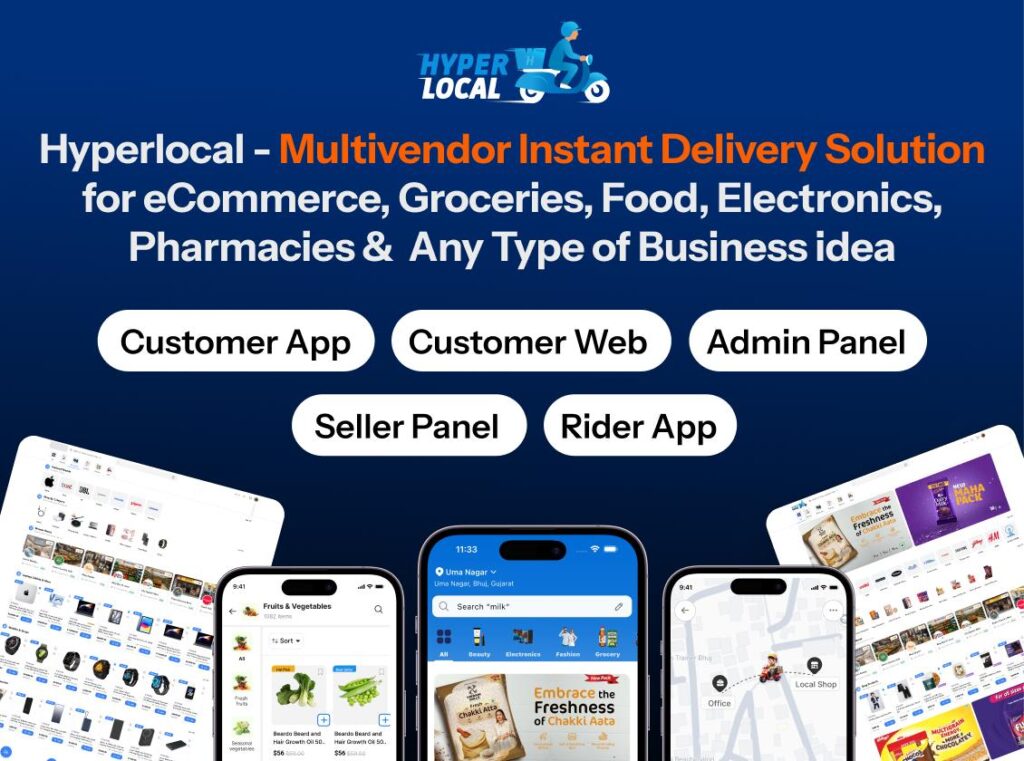
Dokan: Building a Hyperlocal Marketplace
The demand for hyperlocal marketplaces has grown rapidly over the past few years. Consumers now expect fast delivery, local product availability, and personalized services from businesses in their own cities and neighborhoods.
From grocery delivery apps and local food marketplaces to service providers and local artisan stores, hyperlocal commerce has become one of the fastest-growing business models in eCommerce.
With Dokan and WooCommerce, building a hyperlocal marketplace is easier than ever. By connecting local vendors with nearby customers, marketplace owners can create highly scalable and profitable businesses.
In this guide, we’ll explore how to build a successful hyperlocal marketplace using Dokan.
What is a Hyperlocal Marketplace?
A hyperlocal marketplace connects customers with nearby vendors and service providers within a specific geographic area.
Examples include:
- Grocery delivery platforms
- Local food marketplaces
- Pharmacy delivery services
- Local service marketplaces
- Multi-vendor shopping platforms
- Artisan and handmade product marketplaces
The primary focus is serving customers within a limited delivery radius.
Why Hyperlocal Marketplaces Are Growing
Consumer behavior has changed significantly.
Customers now expect:
Faster Delivery
Same-day or next-day delivery.
Local Availability
Products from nearby businesses.
Personalized Service
Better customer support.
Lower Shipping Costs
Reduced delivery expenses.
Community Support
Buying from local businesses.
Hyperlocal commerce continues to grow worldwide.
Benefits of Building a Hyperlocal Marketplace
Lower Logistics Costs
Shorter delivery distances reduce expenses.
Faster Fulfillment
Orders can be delivered quickly.
Better Customer Experience
Customers receive products faster.
Higher Vendor Participation
Local businesses benefit from online exposure.
Strong Community Engagement
Support local economies.
Hyperlocal marketplaces create value for everyone involved.
Popular Hyperlocal Marketplace Niches
Grocery Delivery
Local grocery stores and supermarkets.
Restaurant Delivery
Food and takeaway businesses.
Pharmacy Marketplace
Medicine and healthcare products.
Local Service Marketplace
Plumbers, electricians, and consultants.
Handmade Products Marketplace
Local artisans and creators.
Fresh Produce Marketplace
Farmers and local food suppliers.
Choose a niche that matches local demand.
Why Use Dokan for a Hyperlocal Marketplace?
Dokan provides powerful multi-vendor capabilities.
Features include:
- Vendor management
- Commission systems
- Order management
- Shipping options
- Vendor dashboards
- Payment integrations
Dokan is highly customizable for location-based businesses.
Setting Up Vendor Locations
Location is the heart of hyperlocal marketplaces.
Allow vendors to provide:
Business Address
Delivery Zones
Service Areas
Store Location on Maps
Location data enables local shopping experiences.
Geo-Location Features
Hyperlocal marketplaces often require:
Customer Location Detection
Nearby Store Search
Distance Calculations
Delivery Radius Management
Geo-location improves customer convenience.
Delivery Radius Management
Vendors should define:
- 5 km delivery radius
- 10 km delivery radius
- City-based delivery zones
This prevents orders from being placed outside service areas.
Location-Based Product Search
Customers should easily find nearby products.
Features include:
Search by Location
Search by ZIP Code
Search by City
Search by Distance
Location filters improve product discovery.
Store Locator Functionality
A store locator allows customers to:
- Find nearby vendors
- View store information
- Check business hours
- See delivery areas
Store locators improve usability.
Hyperlocal Delivery Options
Delivery flexibility is critical.
Examples:
Same-Day Delivery
Express Delivery
Scheduled Delivery
Local Pickup
Store Collection
Multiple delivery options improve customer satisfaction.
Delivery Charges
Pricing models may include:
Fixed Delivery Fees
Distance-Based Charges
Free Delivery Thresholds
Vendor-Specific Delivery Fees
Flexible pricing improves profitability.
Hyperlocal Marketplace Categories
Examples:
Groceries
Restaurants
Fresh Produce
Services
Healthcare
Fashion
Organized categories improve navigation.
Vendor Verification
Local marketplaces should verify vendors.
Verification may include:
Business License
Address Verification
Identity Verification
Phone Verification
Trust is critical in hyperlocal commerce.
Customer Reviews and Ratings
Reviews improve confidence.
Allow customers to rate:
Product Quality
Delivery Experience
Vendor Service
Order Accuracy
Reviews help customers make better decisions.
Mobile Optimization
Most hyperlocal customers shop using smartphones.
Ensure:
Fast Loading Pages
Mobile-Friendly Search
One-Page Checkout
Easy Navigation
Mobile optimization is essential.
Payment Methods
Support local payment preferences.
Examples:
Credit Cards
UPI Payments
Cash on Delivery
PayPal
Stripe
Razorpay
Flexible payments improve conversions.
Real-Time Notifications
Keep users informed with:
Order Confirmations
Delivery Updates
New Vendor Registrations
Promotional Notifications
Notifications improve user experience.
Marketing Strategies for Hyperlocal Marketplaces
Local SEO
Optimize for city and area keywords.
Examples:
- Grocery delivery in Delhi
- Restaurants near me
- Local marketplace in Mumbai
Google Business Profiles
Promote local visibility.
Social Media Advertising
Target nearby customers.
Referral Programs
Encourage word-of-mouth marketing.
Local marketing drives growth.
SEO for Hyperlocal Marketplaces
Target keywords like:
- Local marketplace near me
- Same-day delivery marketplace
- Grocery delivery in your city
- Hyperlocal shopping platform
Local SEO is a major growth driver.
Performance Optimization
Hyperlocal marketplaces often handle:
- Large product catalogs
- Geo-location queries
- Multiple vendors
- Real-time searches
Optimize with:
LiteSpeed Cache
Redis Object Cache
Cloudflare CDN
Database Optimization
Performance directly impacts conversions.
Recommended Plugin Stack
Dokan Pro
Marketplace management.
WooCommerce
eCommerce engine.
GeoDirectory
Location management.
FiboSearch
AJAX search.
Razorpay
Payment processing.
FluentCRM
Marketing automation.
LiteSpeed Cache
Performance optimization.
Cloudflare
Security and CDN.
This stack provides an excellent foundation for hyperlocal marketplaces.
Common Hyperlocal Marketplace Mistakes
No Delivery Radius Limits
Creates fulfillment problems.
Poor Mobile Experience
Reduces conversions.
Weak Vendor Verification
Damages trust.
Slow Website Performance
Impacts customer satisfaction.
No Local SEO Strategy
Limits growth.
Avoiding these mistakes improves marketplace success.
Hyperlocal Marketplace Checklist
✓ Vendor Locations
✓ Delivery Radius Setup
✓ Store Locator
✓ Location-Based Search
✓ Mobile Optimization
✓ Local Payment Methods
✓ Customer Reviews
✓ Real-Time Notifications
✓ Local SEO Strategy
✓ Vendor Verification
✓ Performance Optimization
✓ Analytics Tracking
Final Thoughts
Hyperlocal marketplaces are transforming the way customers shop by connecting local businesses with nearby consumers. With growing demand for fast delivery and personalized service, this business model offers tremendous opportunities for entrepreneurs.
Using Dokan and WooCommerce, you can build a powerful hyperlocal marketplace that supports local vendors, improves customer experiences, and creates a scalable online business.
By focusing on geo-location features, delivery optimization, mobile experiences, and local marketing, you can create a successful marketplace that becomes an essential part of your local community.

Hire Me on Upwork – Dokan & WooCommerce Expert

 Chat on WhatsApp