
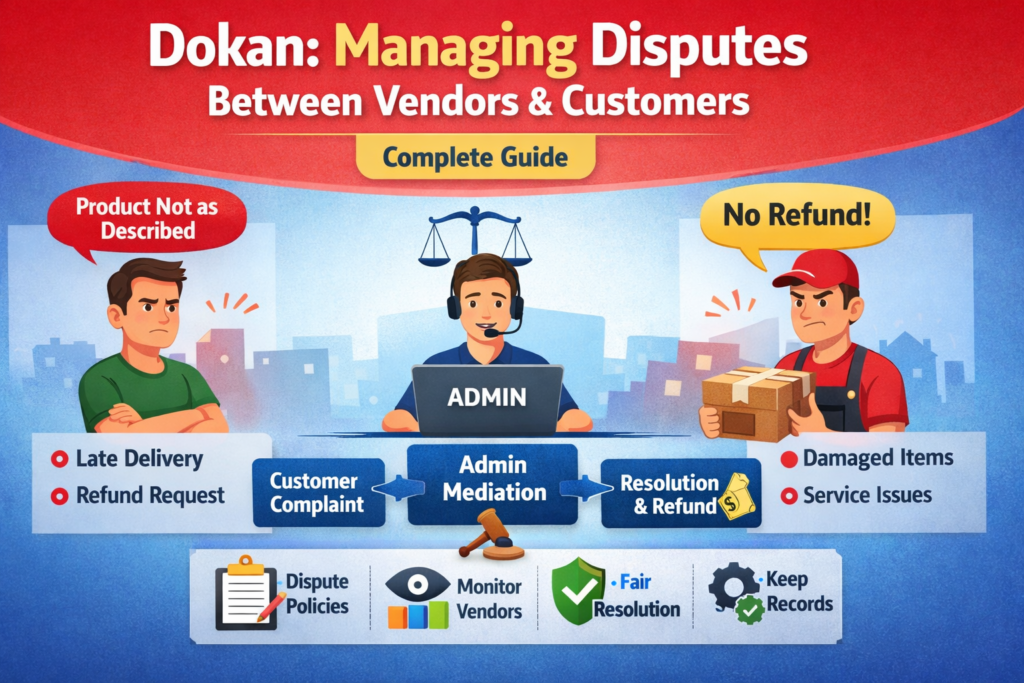
Running a multi-vendor marketplace can be very rewarding, but it also comes with challenges. One of the most common challenges is handling disputes between vendors and customers. When multiple sellers operate on the same platform, disagreements about orders, deliveries, refunds, or product quality can occur.
If disputes are not handled properly, they can damage your marketplace reputation and reduce customer trust. For marketplaces built using WordPress, WooCommerce, and Dokan, having a clear dispute management process is essential.
This guide explains how to manage disputes effectively between vendors and customers in a Dokan-powered marketplace.
Why Dispute Management is Important
Every successful marketplace needs a system to resolve conflicts. Without proper dispute management, several issues can arise:
-
Loss of customer trust
-
Negative reviews and complaints
-
Vendors leaving the platform
-
Poor marketplace reputation
However, when disputes are handled professionally, they can actually improve the marketplace experience. A good dispute management system helps ensure fairness, transparency, and customer satisfaction.
Common Causes of Marketplace Disputes
Understanding why disputes happen is the first step toward preventing them. Some of the most common causes include:
Product Not as Described
Customers may receive items that do not match the description or images shown on the product page.
Delayed Shipping
Late deliveries often lead to customer frustration and refund requests.
Damaged Products
Items may arrive broken or defective during shipping.
Service Not Delivered
In service-based marketplaces, vendors might fail to deliver the promised service within the agreed timeframe.
Refund Disagreements
Customers may request refunds while vendors may refuse or delay them.
Identifying these common problems helps marketplace owners build better policies and resolution systems.
Using Dokan’s Dispute Management System
The premium version of Dokan Pro includes built-in tools that allow customers, vendors, and admins to manage disputes efficiently.
Key features include:
-
Customers can open disputes directly from the order page
-
Vendors can respond to complaints
-
Admin can review and intervene
-
Full communication history is stored
This structured system ensures that disputes are resolved in a professional and transparent manner.
Step 1: Allow Customers to Report Issues Easily
Customers should have a simple way to report problems. A clear dispute system allows users to raise issues without confusion.
Best practices include:
-
Adding a “Report Issue” or “Open Dispute” button in the order section
-
Allowing customers to explain the problem clearly
-
Enabling image uploads for proof
This makes it easier for vendors and administrators to understand the situation.
Step 2: Give Vendors the First Opportunity to Respond
In many cases, vendors can resolve the issue directly with the customer.
Possible vendor responses include:
-
Offering a refund
-
Sending a replacement product
-
Explaining delivery delays
-
Asking for additional information
Allowing vendors to handle disputes first encourages responsibility and improves vendor-customer relationships.
Step 3: Admin Intervention for Fair Resolution
If vendors and customers cannot reach an agreement, the marketplace admin should step in.
Admin responsibilities include:
-
Reviewing order information
-
Checking conversation history
-
Evaluating evidence from both parties
-
Making the final decision
Possible outcomes may include:
-
Full refund
-
Partial refund
-
Product replacement
-
Rejection of the dispute
Admins should always aim for a fair and policy-based decision.
Step 4: Create Clear Marketplace Policies
Many disputes occur because marketplace rules are unclear. Clear policies help reduce misunderstandings.
Important policies to define include:
-
Refund and return policy
-
Delivery time expectations
-
Product quality standards
-
Vendor responsibilities
For example:
Customers may request a refund within 7 days of delivery if the product is damaged or incorrect.
Clear guidelines help both vendors and customers understand what to expect.
Step 5: Monitor Vendor Performance
Tracking vendor behavior is essential for maintaining marketplace quality.
Marketplace owners should monitor:
-
Vendor ratings and reviews
-
Refund rates
-
Dispute frequency
-
Delivery performance
If a vendor repeatedly causes disputes, the admin may issue warnings, temporarily suspend the vendor, or remove them from the platform.
This helps protect customers and maintain a trustworthy marketplace.
Step 6: Automate Notifications
Notifications ensure that all parties stay informed during the dispute process.
Your system should notify users when:
-
A dispute is opened
-
A vendor responds
-
Admin updates the case
-
The dispute is resolved
Quick communication helps resolve issues faster.
Step 7: Maintain Proper Dispute Records
Keeping records of disputes is important for future reference.
Important data to store includes:
-
Dispute reason
-
Communication history
-
Final resolution
-
Refund details
These records can help identify recurring issues and improve marketplace policies.
Common Mistakes Marketplace Owners Should Avoid
Many marketplace owners make mistakes when handling disputes. Some of the most common ones include:
-
Not having a clear refund policy
-
Responding slowly to customer complaints
-
Always siding with vendors
-
Ignoring repeated vendor issues
-
Failing to track dispute patterns
Avoiding these mistakes will help maintain customer trust and marketplace stability.
Best Practices for Reducing Disputes
To minimize disputes in your marketplace:
-
Encourage honest product descriptions
-
Set clear delivery expectations
-
Provide strong customer support
-
Monitor vendor performance regularly
-
Resolve disputes quickly and fairly
A proactive approach helps build a healthier marketplace ecosystem.
Conclusion
Disputes are a normal part of running any online marketplace. However, with the right tools and policies, they can be managed effectively without harming your platform.
Using the dispute management features available in Dokan allows marketplace owners to create a fair system for both vendors and customers.
When disputes are resolved professionally and transparently, your marketplace becomes more trustworthy and reliable for everyone involved.

Hire Me on Upwork – Dokan & WooCommerce Expert

 Chat on WhatsApp