
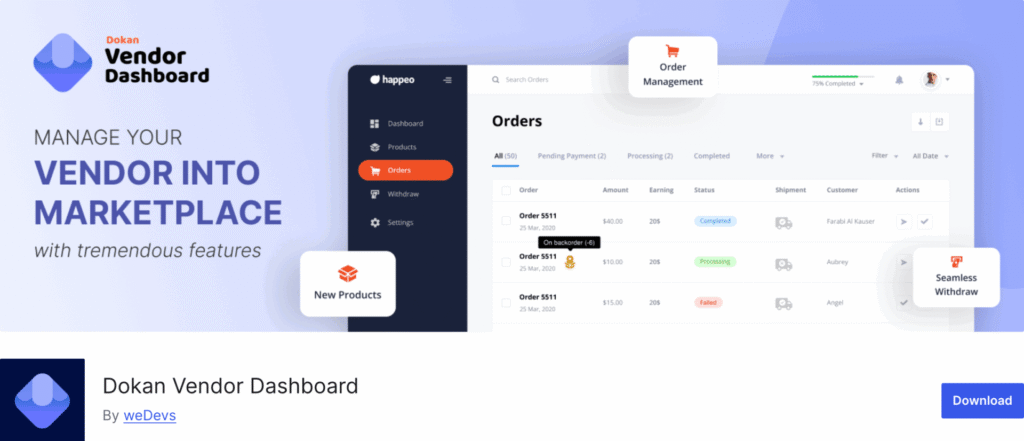
Running a successful multi-vendor marketplace is not just about installing Dokan.
The real challenge begins after vendors join:
Low-quality products
Pricing conflicts
Late order fulfillment
Support chaos
Vendor churn
If vendors are not managed properly, your marketplace reputation suffers first.
This guide covers proven Dokan vendor management best practices used in real-world marketplaces to:
Maintain quality
Increase vendor retention
Improve customer satisfaction
Scale operations smoothly
🔴 Why Vendor Management Is Critical in Dokan
In a Dokan marketplace:
Vendors control products
Vendors control pricing
Vendors affect delivery & service quality
If vendor rules are unclear:
❌ Customers lose trust
❌ Refunds increase
❌ Platform credibility drops
👉 Strong vendor management = stable marketplace growth
🧠 How Vendor Management Works in Dokan
Basic Dokan vendor lifecycle:
1️⃣ Vendor registers
2️⃣ Vendor profile reviewed
3️⃣ Products added
4️⃣ Orders processed
5️⃣ Commission calculated
6️⃣ Withdrawals requested
7️⃣ Performance monitored
If any stage is unmanaged, problems multiply.
1️⃣ Set Clear Vendor Onboarding Rules
❌ Common Mistake
Allowing anyone to register and sell immediately.
✅ Best Practice
Create a controlled onboarding process:
Manual vendor approval
Required business details
Identity verification (if needed)
Category-based permissions
Recommended Settings:
Disable auto vendor approval
Enable product approval for new vendors
Limit categories initially
👉 Quality vendors > Quantity vendors
2️⃣ Define Clear Commission & Pricing Policies
❌ Problem
Vendors complain about payouts or pricing restrictions.
✅ Best Practice
Make commission rules transparent and predictable:
Global commission rate
Category-based commission
Vendor-specific commission (for top sellers)
💡 Example:
New vendors: 15% commission
Verified vendors: 10%
Premium vendors: 5–8%
👉 Transparency reduces disputes.
3️⃣ Enforce Product Quality Standards
❌ Common Issues
Poor product images
Incomplete descriptions
Fake or duplicate listings
✅ Best Practices
Enable admin product approval
Create product listing guidelines
Set minimum image & description requirements
📌 Tip:
Reject low-quality products early — it saves support time later.
4️⃣ Standardize Shipping & Delivery Rules
❌ Problem
Each vendor handles shipping differently → customer confusion.
✅ Best Practice
Standardize shipping policies:
Define allowed shipping methods
Set delivery timelines
Restrict unsupported locations
Educate vendors on shipping setup
For advanced marketplaces:
Zone-based shipping
Weight-based pricing
Vendor-level shipping templates
👉 Consistency builds customer trust.
5️⃣ Monitor Vendor Performance Regularly
❌ Mistake
Ignoring vendor performance until complaints appear.
✅ Best Practice
Track these metrics monthly:
Order completion rate
Cancellation rate
Refund requests
Customer ratings
Response time
📊 Action Plan:
Warn underperforming vendors
Temporarily restrict features
Remove repeat violators
👉 A few bad vendors can destroy the whole platform.
6️⃣ Educate Vendors (This Is a Growth Hack)
Most vendors fail not because they’re bad, but because they’re confused.
✅ Best Practice
Create vendor education resources:
Vendor handbook (PDF or page)
Video tutorials
FAQs
Step-by-step dashboards guides
Topics to cover:
Product uploads
Order handling
Shipping setup
Withdrawal process
7️⃣ Set Clear Withdrawal & Payment Rules
❌ Common Complaints
Delayed payments
Confusing withdrawal limits
✅ Best Practice
Define:
Minimum withdrawal amount
Withdrawal schedule (weekly / bi-weekly)
Supported payment methods
Verification requirements
💡 Tip:
Automated, predictable payouts = higher vendor retention.
8️⃣ Maintain Strong Vendor Communication
❌ Problem
Vendors feel ignored → they leave silently.
✅ Best Practice
Regular announcement emails
Platform updates notifications
Policy change alerts
Vendor feedback surveys
Tools:
Dokan announcements
Email automation
WhatsApp/Slack groups (optional)
👉 Vendors who feel heard perform better.
9️⃣ Handle Vendor Disputes Professionally
Disputes are inevitable in any marketplace.
✅ Best Practice
Create a clear dispute policy:
Order-based dispute flow
Response timelines
Evidence requirements
Admin final decision authority
📌 Always:
Stay neutral
Document everything
Be consistent
🔟 Remove or Upgrade Vendors Strategically
Not all vendors deserve the same privileges.
✅ Best Practice
Segment vendors:
New vendors
Verified vendors
Top performers
Offer:
Lower commission
Faster withdrawals
Featured placement
And for poor performers:
Warnings
Restrictions
Removal if needed
👉 This creates healthy competition.
🚨 Common Vendor Management Mistakes to Avoid
❌ No onboarding rules
❌ No performance tracking
❌ Allowing poor products
❌ Delayed payments
❌ Zero vendor communication
These mistakes kill marketplaces silently.
📚 Also Read (Internal Links)

Hire Me on Upwork – Dokan & WooCommerce Expert

 Chat on WhatsApp