
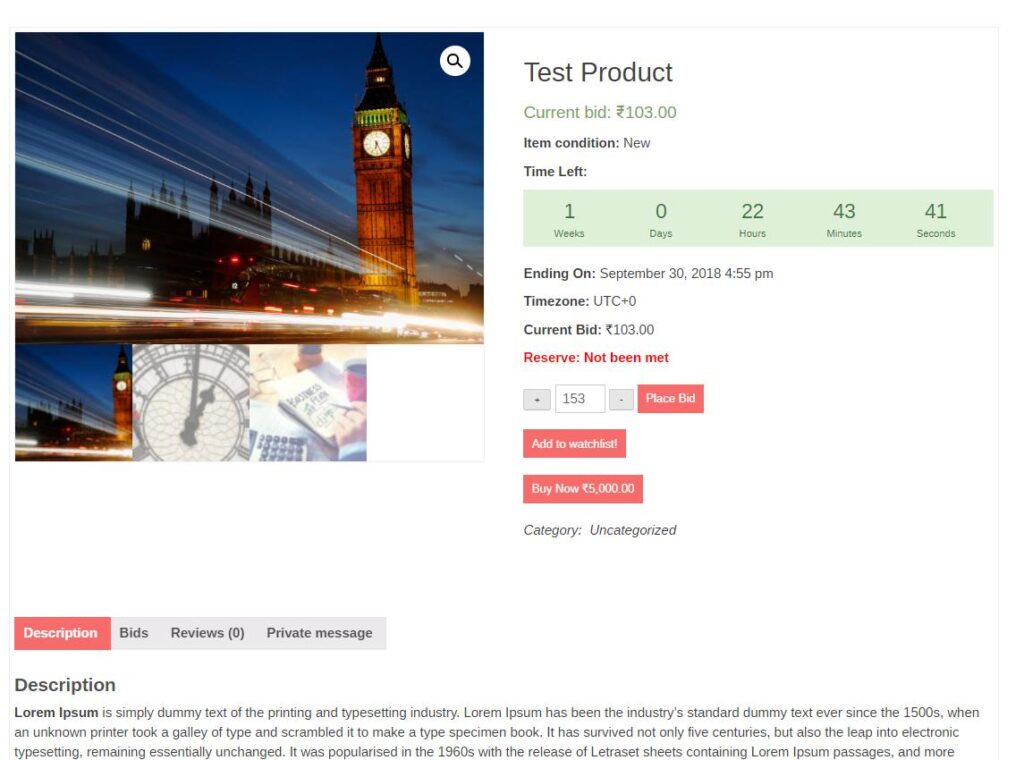
Online auction marketplaces have become increasingly popular across industries such as collectibles, antiques, vehicles, real estate, artwork, electronics, and luxury products. Unlike traditional eCommerce stores, auction platforms create competitive bidding environments where buyers compete for products, often resulting in higher selling prices and increased engagement.
With Dokan and WooCommerce, marketplace owners can build powerful multi-vendor auction platforms where vendors can list products, manage bids, and sell items through auction-based pricing models.
In this guide, you’ll learn how to build and optimize an auction marketplace using Dokan.
What Is an Auction Marketplace?
An auction marketplace allows sellers to list products for bidding instead of fixed pricing.
Customers place bids on products, and when the auction ends, the highest bidder wins the item.
Common auction types include:
- Standard Auctions
- Reverse Auctions
- Silent Auctions
- Timed Auctions
- Reserve Price Auctions
- Buy Now Auctions
Auction marketplaces are commonly used for:
- Collectibles
- Rare products
- Vehicles
- Artworks
- Antiques
- Real estate
- Luxury goods
Why Build an Auction Marketplace?
Auction platforms offer unique advantages compared to traditional online stores.
Higher Revenue Potential
Competitive bidding often increases final selling prices.
Increased User Engagement
Buyers regularly return to monitor auctions and place bids.
Better Inventory Turnover
Unique and limited products often sell faster through auctions.
Marketplace Differentiation
Auction marketplaces stand out from traditional eCommerce competitors.
Vendor Growth Opportunities
Sellers can maximize profits through bidding competition.
Why Use Dokan for Auction Marketplaces?
Dokan provides a strong multi-vendor foundation that allows vendors to manage products independently.
Benefits include:
- Vendor dashboards
- Product management
- Commission systems
- Order management
- Vendor withdrawals
- Marketplace administration
By combining Dokan with auction functionality, you can create a scalable auction ecosystem.
Essential Features of an Auction Marketplace
Vendor Auction Listings
Vendors should be able to:
- Create auction products
- Set starting prices
- Configure auction durations
- Define reserve prices
- Upload product galleries
This allows sellers to manage auctions independently.
Real-Time Bidding
Customers should be able to:
- Place bids instantly
- View current highest bids
- Track auction progress
- Receive bid notifications
Real-time bidding increases excitement and participation.
Auction Timers
Every auction should display:
- Start time
- End time
- Remaining time
Countdown timers create urgency and improve conversions.
Reserve Price Support
Reserve prices allow vendors to define minimum acceptable sale prices.
Benefits include:
- Seller protection
- Better pricing control
- Reduced auction risk
Buy Now Functionality
Many auction marketplaces offer both:
- Auction bidding
- Immediate purchase options
Benefits include:
- Faster sales
- More flexibility
- Increased conversions
Customers can choose between bidding or purchasing instantly.
Vendor Management Features
Dokan allows vendors to manage their stores efficiently.
Auction vendors should be able to:
Create Auctions
Set:
- Auction duration
- Starting bid
- Reserve price
- Buy Now price
Monitor Bids
Track:
- Current bids
- Bid history
- Winning bidders
Manage Orders
Handle:
- Payments
- Shipping
- Customer communication
Customer Experience Optimization
A successful auction marketplace depends on user experience.
Auction Search System
Allow customers to search auctions by:
- Category
- Price range
- Vendor
- Location
- Auction ending soon
Advanced Filters
Include filters such as:
- Active Auctions
- Ending Today
- New Listings
- Reserve Met
- Buy Now Available
Advanced filtering improves product discovery.
Watchlists
Allow users to save favorite auctions.
Benefits include:
- Increased engagement
- Higher return visits
- Better bidding participation
Auction Notification System
Notifications are critical for auction marketplaces.
Customers should receive alerts for:
- New bids
- Outbid notifications
- Auction ending reminders
- Auction wins
- Payment requests
Vendors should receive notifications for:
- New bids
- Auction completion
- Winning bidder confirmation
Automated notifications improve marketplace activity.
Payment Processing
Secure payments are essential.
Popular payment methods include:
- Stripe
- PayPal
- Razorpay
- Bank transfers
Auction marketplaces should support:
- Immediate payments
- Deposit systems
- Escrow services
Depending on marketplace requirements.
Mobile Optimization
Most users browse marketplaces on mobile devices.
Ensure:
- Responsive design
- Mobile bidding interface
- Touch-friendly controls
- Fast page loading
Mobile optimization improves participation rates.
Security Considerations
Auction platforms often attract fraudulent activities.
Implement:
User Verification
Verify:
- Vendors
- High-value buyers
- Identity information
Anti-Fraud Systems
Monitor:
- Suspicious bidding
- Fake accounts
- Automated bots
Secure Payments
Use trusted payment gateways and SSL encryption.
SEO Optimization for Auction Marketplaces
SEO helps attract organic traffic.
Optimize Auction Pages
Include:
- Product descriptions
- Auction details
- Vendor information
Structured Data
Use schema markup for:
- Products
- Reviews
- Prices
- Availability
Internal Linking
Link related:
- Auctions
- Categories
- Vendor stores
This improves crawlability and user engagement.
Performance Optimization
Large auction marketplaces require strong performance.
Object Caching
Use Redis to reduce database load.
CDN Integration
Cloudflare improves global delivery speed.
Database Optimization
Optimize:
- Bid records
- Product data
- Vendor information
Hosting Infrastructure
Choose scalable cloud hosting capable of handling traffic spikes.
Recommended Plugins
Dokan Pro
Provides multi-vendor marketplace functionality.
WooCommerce Simple Auctions
Adds auction capabilities to WooCommerce products.
WP Mail SMTP
Improves notification delivery.
Redis Object Cache
Improves marketplace performance.
Cloudflare
Enhances security and speed.
Common Auction Marketplace Challenges
Bid Sniping
Last-second bidding may frustrate users.
Fake Bids
Fraudulent bidding can impact marketplace trust.
Payment Failures
Winning bidders may fail to complete payments.
Performance Issues
High bidding activity increases server load.
Vendor Quality Control
Marketplace owners must maintain listing standards.
Auction Marketplace Launch Checklist
✓ Dokan Marketplace Setup
✓ Auction Plugin Installation
✓ Vendor Registration System
✓ Auction Product Creation
✓ Bid Management System
✓ Auction Notifications
✓ Payment Gateway Integration
✓ Mobile Optimization
✓ Security Configuration
✓ Performance Optimization
✓ Vendor Verification
✓ SEO Setup
Final Thoughts
Building an auction marketplace with Dokan provides a powerful opportunity to create a unique and engaging eCommerce platform. By combining multi-vendor capabilities with auction functionality, marketplace owners can attract both buyers and sellers while creating competitive bidding environments.
With proper vendor management, real-time bidding, advanced search features, notification systems, security measures, and performance optimization, a Dokan auction marketplace can scale into a successful online business.
Whether you’re targeting collectibles, vehicles, luxury products, antiques, or niche industries, an auction-based marketplace can provide significant growth opportunities and a highly engaging user experience.

Hire Me on Upwork – Dokan & WooCommerce Expert

 Chat on WhatsApp