
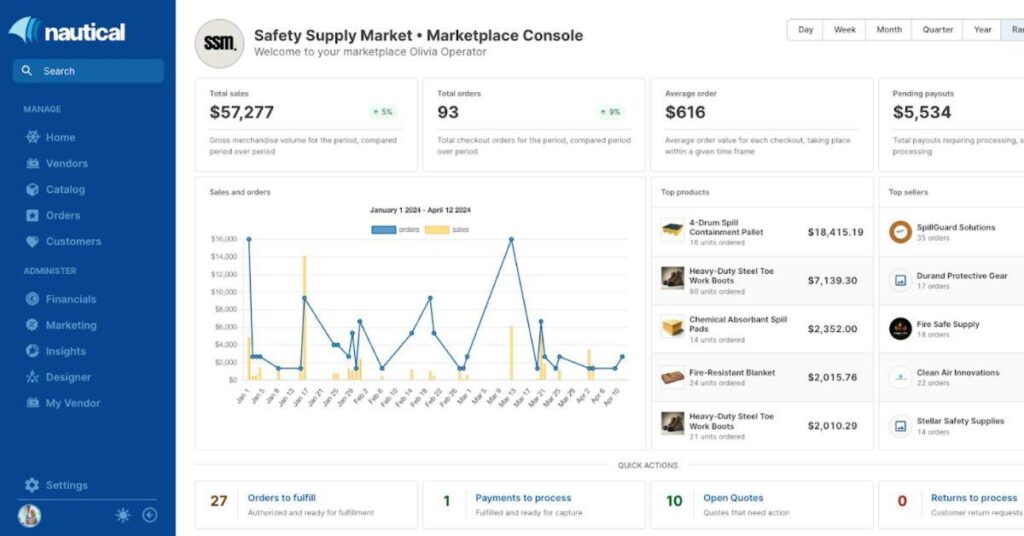
Dokan: Building a B2B Multi-Vendor Marketplace with Dokan
The global B2B eCommerce market is growing faster than ever, with manufacturers, wholesalers, distributors, and suppliers increasingly moving their businesses online. Unlike traditional B2C stores, B2B marketplaces focus on bulk ordering, custom pricing, company accounts, RFQs (Request for Quotations), credit terms, and long-term business relationships.
With Dokan and WooCommerce, you can build a professional B2B multi-vendor marketplace where multiple suppliers sell products, manage wholesale pricing, receive orders, and interact with business customers—all from a single platform.
This guide explains how to build a scalable B2B marketplace using Dokan, from vendor onboarding to payment systems and automation.
What is a B2B Multi-Vendor Marketplace?
A B2B (Business-to-Business) marketplace connects multiple suppliers with business buyers.
Examples include:
- Industrial equipment marketplace
- Construction materials marketplace
- Medical supplies marketplace
- Diamond and jewelry marketplace
- Electronics wholesale marketplace
- Textile marketplace
- Automotive parts marketplace
- Food & beverage wholesale marketplace
Unlike retail stores, B2B marketplaces emphasize long-term purchasing relationships and bulk transactions.
Why Choose Dokan for a B2B Marketplace?
Dokan provides powerful multi-vendor functionality that can be extended for wholesale businesses.
Benefits include:
Independent Vendor Stores
Each supplier manages their own catalog.
Vendor Dashboards
Manage products, orders, shipping, and withdrawals.
Flexible Commission System
Earn marketplace commissions from every sale.
WooCommerce Integration
Access thousands of WooCommerce extensions.
Highly Scalable
Supports thousands of vendors and products.
Key Features of a B2B Marketplace
A professional B2B marketplace should include:
- Vendor registration
- Wholesale pricing
- Company accounts
- Minimum order quantities (MOQ)
- Request for Quotation (RFQ)
- Bulk ordering
- Tax management
- Custom payment terms
- Shipping management
- Vendor verification
These features create a business-friendly buying experience.
Vendor Registration & Approval
Supplier quality is critical.
Collect:
Company Name
Business Registration Number
GST/VAT Number
Business Address
Contact Details
Product Categories
Certifications
Approve vendors manually to maintain marketplace quality.
Business Customer Registration
Allow companies to create dedicated B2B accounts.
Registration fields may include:
- Company Name
- Buyer Name
- Phone Number
- Tax ID
- Billing Address
- Shipping Address
Business accounts simplify repeat purchasing.
Vendor Store Management
Every supplier receives a professional storefront.
Features include:
Company Logo
Business Description
Certifications
Product Catalog
Contact Information
Shipping Policies
Return Policies
Professional stores increase buyer confidence.
Wholesale Pricing
Offer different prices for different customer types.
Examples:
Retail Customer
$100 per unit
Wholesale Customer
$80 per unit
Distributor
$70 per unit
Tiered pricing encourages bulk purchases.
Minimum Order Quantity (MOQ)
Many wholesalers require minimum quantities.
Examples:
- Minimum 10 units
- Minimum 50 pieces
- Minimum ₹25,000 order
- Minimum 100 kg
MOQ improves operational efficiency.
Request for Quotation (RFQ)
RFQs are essential for B2B commerce.
Buyers can:
- Request custom pricing
- Negotiate quantities
- Discuss delivery timelines
- Request product samples
RFQs help close high-value deals.
Bulk Order Forms
Simplify purchasing with:
CSV Order Upload
Quick Order Tables
Bulk Add-to-Cart
Product SKU Search
Bulk ordering saves buyers time.
Product Catalog Management
Suppliers can manage:
Product Images
Technical Specifications
Pricing
Stock Levels
Product Variations
Downloadable Documents
Detailed catalogs improve purchasing decisions.
Product Documents
Allow vendors to upload:
- PDFs
- Technical Datasheets
- Safety Documents
- Installation Guides
- Product Catalogs
Documentation builds trust with business buyers.
Company Account Management
Support multiple users under one company.
Examples:
Purchasing Manager
Finance Team
Warehouse Staff
Company Administrator
Multi-user access improves workflow.
Payment Options
B2B customers often require flexible payments.
Support:
Credit Cards
Bank Transfers
Stripe
PayPal
Razorpay
Purchase Orders (PO)
Net 30 / Net 60 Payment Terms
Flexible payments encourage larger orders.
Shipping Management
B2B shipping differs from retail.
Offer:
Freight Shipping
Local Delivery
Warehouse Pickup
Vendor Shipping
Third-Party Logistics (3PL)
Flexible logistics improve customer satisfaction.
Tax Management
Support business taxation.
Examples:
GST
VAT
Tax Exemption Certificates
Reverse Charge
Business Invoices
Automated tax handling improves compliance.
Customer Communication
Allow buyers to contact suppliers.
Communication methods include:
Inquiry Forms
RFQ Requests
WhatsApp Integration
Live Chat
Email Notifications
Fast communication speeds up purchasing decisions.
Vendor Verification
Build trust by verifying suppliers.
Verification methods:
Business License
Tax Registration
Identity Verification
Address Verification
Quality Certifications
Verified vendors improve marketplace credibility.
Marketplace Commission Models
Popular commission structures:
Percentage-Based
Example: 8% commission
Fixed Fee
Example: $20 per order
Category-Based
Different commission rates by industry.
Flexible commissions maximize profitability.
Customer Loyalty Programs
Reward repeat buyers with:
Volume Discounts
Reward Points
Exclusive Pricing
VIP Memberships
Priority Support
Loyal customers generate recurring revenue.
Marketplace SEO
Optimize:
Product Pages
Vendor Stores
Industry Categories
Landing Pages
Blog Content
SEO generates qualified B2B traffic.
Marketing Strategies
Promote your marketplace through:
LinkedIn Marketing
Google Ads
Content Marketing
Email Marketing
Trade Associations
Industry Events
B2B marketing focuses on relationship building.
Analytics & Reporting
Monitor:
Vendor Sales
Marketplace Revenue
Average Order Value
Customer Lifetime Value
RFQ Conversion Rate
Top Product Categories
Data-driven decisions improve growth.
Security Best Practices
Protect business information with:
SSL Certificates
Two-Factor Authentication
User Role Management
Firewalls
Malware Protection
Automated Backups
Business buyers expect enterprise-level security.
Performance Optimization
Large B2B catalogs require optimization.
Use:
LiteSpeed Cache
Redis Object Cache
Cloudflare CDN
Image Optimization
Database Cleanup
Fast marketplaces improve user experience.
Recommended Plugin Stack
Dokan Pro
Multi-vendor marketplace.
WooCommerce
eCommerce engine.
B2BKing
Wholesale pricing and B2B features.
Request a Quote Plugin
RFQ functionality.
Advanced Custom Fields (ACF)
Custom business fields.
FluentCRM
Email automation.
WP Mail SMTP
Reliable email delivery.
LiteSpeed Cache
Performance optimization.
Redis Object Cache
Database caching.
Cloudflare
Security and CDN.
This stack creates a powerful B2B marketplace.
Common B2B Marketplace Mistakes
No Vendor Verification
Reduces buyer trust.
Missing Wholesale Pricing
Limits B2B functionality.
No RFQ System
Misses high-value opportunities.
Weak Search & Filters
Makes products difficult to find.
Poor Mobile Experience
Frustrates business buyers.
Ignoring SEO
Limits long-term organic growth.
Avoiding these mistakes creates a stronger marketplace.
B2B Marketplace Checklist
✅ Vendor Registration & Approval
✅ Business Customer Accounts
✅ Wholesale Pricing
✅ Minimum Order Quantities
✅ RFQ System
✅ Bulk Order Forms
✅ Product Documents
✅ Flexible Payment Options
✅ Shipping Configuration
✅ Tax Management
✅ Vendor Verification
✅ Customer Communication
✅ Marketplace SEO
✅ Marketing Automation
✅ Security Hardening
✅ Automated Backups
✅ Performance Optimization
✅ Analytics Dashboard
✅ Mobile Optimization
✅ Regular Marketplace Audits
Final Thoughts
Building a B2B multi-vendor marketplace with Dokan is an excellent opportunity to serve manufacturers, wholesalers, distributors, and professional buyers. By combining Dokan’s multi-vendor capabilities with WooCommerce and specialized B2B extensions, you can create a scalable platform that simplifies wholesale commerce and builds lasting business relationships.
Focus on providing features such as wholesale pricing, RFQs, vendor verification, flexible payment options, and high-performance infrastructure. These elements will help your marketplace stand out and support long-term growth in the competitive B2B eCommerce industry.

Hire Me on Upwork – Dokan & WooCommerce Expert

 Chat on WhatsApp